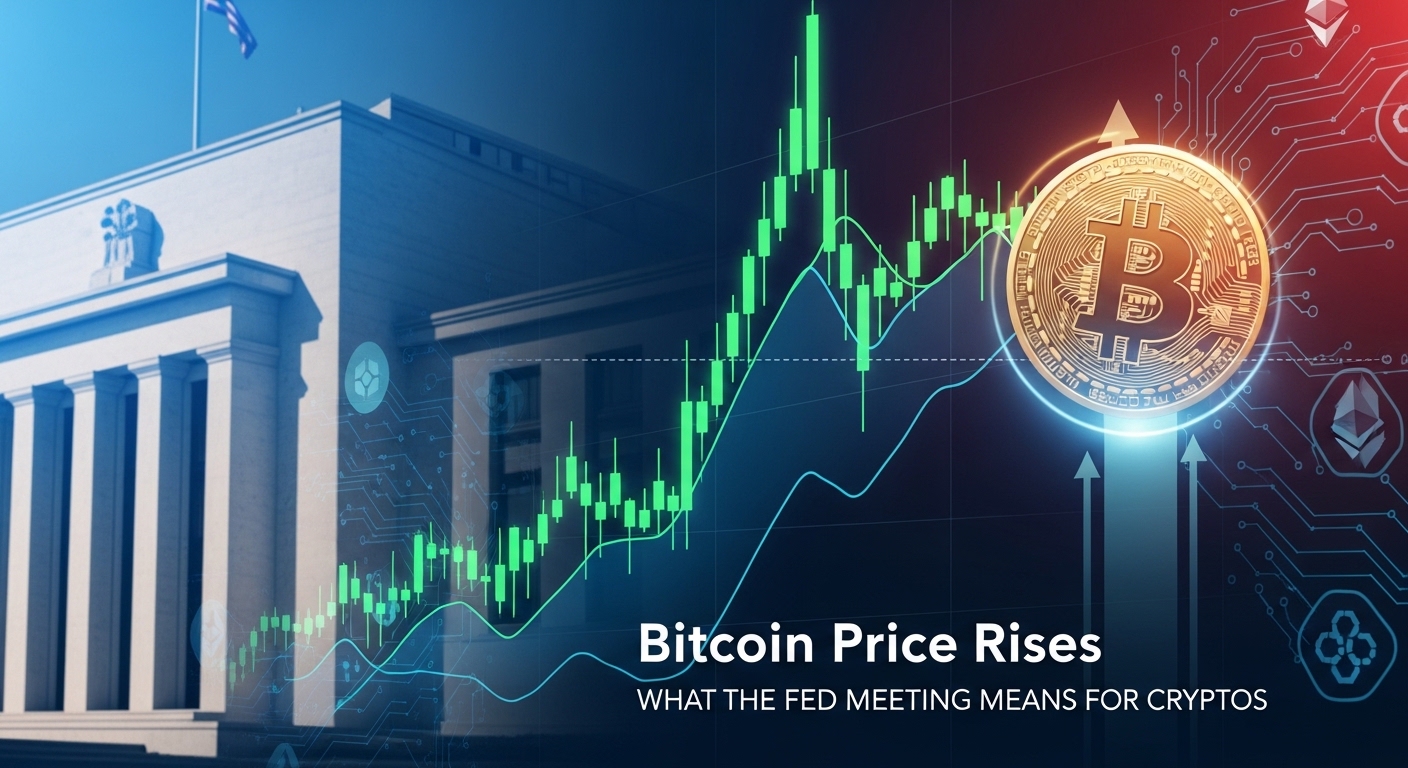
The Bitcoin price rises narrative has once again captured global attention, reigniting discussions among investors, analysts, and policymakers. In recent weeks, the cryptocurrency market has experienced renewed momentum, with Bitcoin leading the charge. This upward movement coincides with a highly anticipated Federal Reserve meeting, where key decisions about interest rates and monetary policy have sent ripples across financial markets.
Cryptocurrencies, once seen as fringe assets, are now deeply intertwined with macroeconomic forces. The Federal Reserve’s stance on inflation, liquidity, and economic growth directly impacts investor sentiment—not only in traditional markets but also in digital assets. As a result, when the Fed speaks, crypto listens.
This article explores why the Bitcoin price rises following the Fed meeting, what signals the central bank has sent, and how these developments could shape the future of cryptocurrencies. We will also analyze broader market trends, investor behavior, and the potential long-term implications for digital assets.
The Relationship Between Bitcoin and the Federal Reserve
How Monetary Policy Influences Crypto Markets
To why the Bitcoin price rises, it’s essential to grasp how monetary policy affects financial markets. The Federal Reserve controls interest rates and liquidity through tools such as rate hikes, rate cuts, and quantitative easing. These decisions influence how much money flows into risk assets, including cryptocurrencies.
When interest rates are low, borrowing becomes cheaper, and investors are more likely to allocate funds to high-risk, high-reward assets like Bitcoin. Conversely, when rates rise, safer investments such as bonds become more attractive, often leading to a decline in crypto demand. In the recent Fed meeting, signals of a potential slowdown in rate hikes—or even future rate cuts—have created optimism among investors. This optimism has contributed significantly to the Bitcoin price rises, as liquidity expectations improve.
Bitcoin as a Hedge Against Inflation
Another reason the Bitcoin price rises during certain economic conditions is its perception as a hedge against inflation. While this narrative has been debated, many investors still view Bitcoin as “digital gold.” When inflation remains elevated and fiat currencies lose purchasing power, Bitcoin can appear more attractive. The Fed’s acknowledgment of persistent inflation pressures, combined with cautious policy adjustments, has strengthened this perception.
Key Takeaways from the Latest Fed Meeting
Interest Rate Decisions and Market Reactions
The latest Federal Reserve meeting delivered crucial insights into the future of U.S. monetary policy. Although the Fed maintained a cautious tone, it hinted at a possible pause in aggressive rate hikes. This shift has been interpreted as a positive signal for risk assets. As a result, the Bitcoin price rises almost immediately following the announcement. Markets reacted swiftly, with increased trading volumes and renewed investor interest in cryptocurrencies.
Forward Guidance and Investor Sentiment
Forward guidance plays a critical role in shaping market expectations. The Fed’s language suggested a more balanced approach, focusing on economic stability rather than aggressive tightening.This shift has boosted confidence across financial markets. For crypto investors, the message was clear: the environment may soon become more favorable for growth-oriented assets. Consequently, the Bitcoin price rises as traders anticipate improved liquidity conditions.
Why Bitcoin Price Rises After Fed Announcements

Increased Liquidity Expectations
Liquidity is the lifeblood of financial markets. When investors expect more liquidity, they are more willing to take risks. The Fed’s recent stance suggests that liquidity conditions could improve in the near future. This expectation directly contributes to the Bitcoin price rises, as more capital flows into the crypto market. Institutional investors, in particular, are highly sensitive to liquidity changes and often adjust their portfolios accordingly.
Weakening Dollar Impact
The U.S. dollar’s strength is closely tied to Federal Reserve policy. When the Fed adopts a less aggressive stance, the dollar often weakens. A weaker dollar typically benefits Bitcoin, as it becomes cheaper for international investors to purchase. This dynamic further explains why the Bitcoin price rises following the Fed meeting. The inverse relationship between the dollar and Bitcoin continues to play a significant role in market movements.
Broader Implications for the Cryptocurrency Market
Altcoins Following Bitcoin’s Lead
Bitcoin often sets the tone for the entire cryptocurrency market. When the Bitcoin price rises, altcoins tend to follow suit. This phenomenon, commonly referred to as “Bitcoin dominance,” highlights the leading role of Bitcoin in the digital asset ecosystem. As Bitcoin gains momentum, investor confidence spills over into other cryptocurrencies, driving broader market growth. This ripple effect amplifies the impact of Fed-related developments.
Institutional Investment Trends
Institutional investors have become a major force in the crypto market. Their decisions are heavily influenced by macroeconomic factors, including Federal Reserve policies. The recent Fed meeting has encouraged institutions to reconsider their exposure to digital assets. With improving market conditions, more institutional capital could flow into Bitcoin, further supporting the Bitcoin price rises trend.
Risks and Uncertainties Ahead
Potential Policy Reversals
While the current outlook appears positive, uncertainties remain. The Federal Reserve could change its stance if inflation resurges or economic conditions worsen. Such a reversal could negatively impact cryptocurrencies. If the Fed resumes aggressive tightening, the Bitcoin price rises trend could reverse, leading to increased volatility and potential market corrections.
Regulatory Challenges
In addition to monetary policy, regulatory developments also play a crucial role in shaping the crypto market. Governments worldwide are working to establish clearer frameworks for digital assets. Uncertainty around regulation can influence investor sentiment and potentially disrupt the upward momentum of Bitcoin. Even as the Bitcoin price rises, regulatory risks remain a key consideration.
Long-Term Outlook for Bitcoin and Cryptos
Growing Adoption and Use Cases
Despite short-term fluctuations, the long-term outlook for Bitcoin remains promising. Increasing adoption by individuals, businesses, and institutions continues to drive demand.As more use cases emerge, Bitcoin’s role in the global financial system could expand. This underlying growth supports the idea that the Bitcoin price rises trend may continue over time.
Integration with Traditional Finance
The integration of cryptocurrencies with traditional financial systems is accelerating. From exchange-traded funds (ETFs) to blockchain-based financial services, the line between traditional and digital finance is blurring.This integration enhances legitimacy and attracts more investors, further contributing to the Bitcoin price rises narrative.
The Role of Market Psychology

Fear and Greed Cycles
Market psychology plays a significant role in cryptocurrency price movements. The Bitcoin price rises not only due to fundamental factors but also because of investor emotions. When optimism dominates, prices can surge rapidly. Conversely, fear can trigger sharp declines. Understanding these cycles is essential for navigating the crypto market effectively.
Media Influence and Hype
Media coverage can amplify market trends. Positive news about the Fed or Bitcoin often leads to increased attention and investor participation. This heightened interest can accelerate the Bitcoin price rises, creating a feedback loop that drives further growth.
Conclusion
The recent surge in Bitcoin’s value highlights the powerful connection between macroeconomic policy and digital assets. The Federal Reserve’s latest meeting has provided a more optimistic outlook for risk markets, fueling renewed interest in cryptocurrencies. As liquidity expectations improve and investor confidence grows, the Bitcoin price rises trend reflects broader shifts in the financial landscape. However, uncertainties remain, including potential policy changes and regulatory challenges. For investors, understanding the interplay between the Fed and crypto markets is crucial. While short-term volatility is inevitable, the long-term prospects for Bitcoin and the broader cryptocurrency ecosystem remain compelling.
FAQs
Q: Why does Bitcoin price rise after Fed meetings?
The Bitcoin price rises after Fed meetings mainly due to changes in interest rate expectations and liquidity conditions. A dovish stance typically boosts risk assets like cryptocurrencies.
Q: How do interest rates affect Bitcoin?
Lower interest rates make borrowing cheaper and encourage investment in high-risk assets, leading to scenarios where the Bitcoin price rises. Higher rates usually have the opposite effect.
Q: Is Bitcoin a reliable hedge against inflation?
Bitcoin is often considered a hedge against inflation, but its effectiveness varies. While the Bitcoin price rises during some inflationary periods, it remains a volatile asset.
Q: What role does the U.S. dollar play in Bitcoin pricing?
A weaker U.S. dollar often supports Bitcoin demand, contributing to situations where the Bitcoin price rises due to increased global purchasing power.
Q: Should investors buy Bitcoin after a Fed meeting?
Investment decisions depend on individual risk tolerance and market analysis. While the Bitcoin price rises can signal opportunities, it’s important to consider long-term strategies and potential risks.