The cryptocurrency market continues to evolve rapidly in 2026, with institutional participation playing a crucial role in shaping price movements and investor sentiment. One of the most closely watched indicators in recent months has been Bitcoin ETF inflows, which offer valuable insight into how traditional investors are engaging with digital assets. The latest development shows that Bitcoin ETF inflows have reached a 7-day streak, signaling renewed interest in the market. However, despite this positive momentum, inflows are still lagging behind the robust pace seen in October.
This nuanced trend highlights a complex market dynamic. On one hand, sustained inflows indicate confidence in Bitcoin as an asset class. On the other hand, the slower pace compared to October suggests caution among institutional investors. These patterns is essential for anyone seeking accurate Bitcoin ETF inflows analysis, as they reflect broader trends in crypto investment strategies, institutional adoption, and market liquidity. This article explores the reasons behind the current streak, compares it with October’s performance, and examines what it means for the future of Bitcoin and the wider cryptocurrency ecosystem.
Bitcoin ETFs and Their Importance
What Are Bitcoin ETFs?
Bitcoin Exchange-Traded Funds (ETFs) are financial instruments that allow investors to gain exposure to Bitcoin without directly purchasing or holding the cryptocurrency. These funds are traded on traditional stock exchanges, making them accessible to a broader range of investors. The rise of Bitcoin ETFs has transformed how institutions interact with digital assets. By simplifying access and reducing technical barriers, ETFs have become a key driver of institutional crypto adoption and digital asset investment growth.
Why Bitcoin ETF Inflows Matter
Bitcoin ETF inflows represent the amount of capital entering these funds over a specific period. Consistent inflows often signal growing confidence in Bitcoin, while outflows may indicate declining interest or profit-taking. The recent development, where Bitcoin ETF inflows hit a 7-day streak, is particularly significant. It suggests that institutional investors are re-entering the market, albeit cautiously. Monitoring ETF flow trends, market sentiment indicators, and investment inflows data provides valuable insights into the health of the crypto market.
The 7-Day Inflow Streak: What It Means
Signs of Renewed Investor Confidence
The current 7-day streak of Bitcoin ETF inflows indicates a steady return of investor confidence. After periods of volatility and uncertainty, consistent inflows suggest that institutions are once again allocating capital to Bitcoin. This trend reflects a broader shift in crypto market sentiment. Investors appear to be viewing Bitcoin as a long-term asset rather than a short-term speculative instrument. The sustained inflow pattern aligns with increasing interest in portfolio diversification and alternative asset classes.
Gradual Recovery Rather Than Surge
While the streak is encouraging, it is important to note that the pace of inflows remains moderate. Unlike sudden spikes, the current trend represents a gradual recovery. This indicates a more cautious approach by investors, who may be waiting for clearer market signals before committing larger amounts of capital. This measured behavior is typical in evolving markets, where participants balance optimism with risk management. The steady nature of Bitcoin ETF inflows suggests stability but not exuberance.
Comparing Current Inflows to October’s Pace
October’s Record-Breaking Momentum
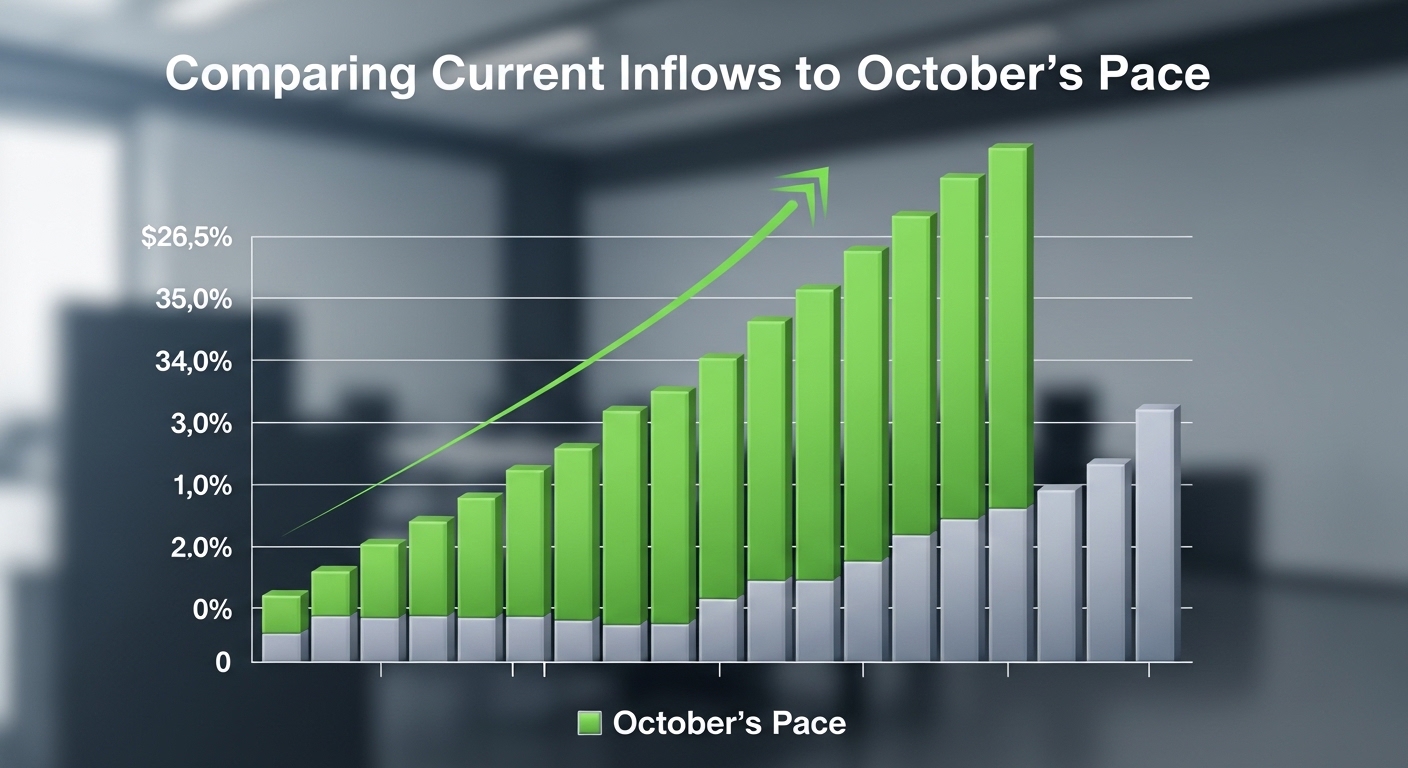
October was a standout month for Bitcoin ETF inflows, marked by significant capital inflows and heightened market activity. During that period, strong bullish sentiment drove rapid investment, leading to record-breaking figures. The surge was fueled by a combination of factors, including positive regulatory developments, increased institutional participation, and rising Bitcoin prices. This created a powerful momentum that set a high benchmark for future performance.
Why Current Inflows Are Lagging
Despite the ongoing 7-day streak, current Bitcoin ETF inflows are lagging behind October’s pace. Several factors contribute to this difference. Market conditions have become more uncertain, with investors adopting a more cautious stance. Additionally, profit-taking after October’s rally may have reduced the urgency to invest. Some institutions are likely reassessing their strategies, focusing on risk-adjusted returns and market timing strategies rather than aggressive accumulation.
Factors Influencing Bitcoin ETF Inflows
Macroeconomic Conditions
Global economic factors play a significant role in shaping Bitcoin ETF inflows. Interest rates, inflation trends, and monetary policies influence investor behavior across all asset classes. In 2026, shifting economic conditions have created a mixed environment for cryptocurrencies. While some investors view Bitcoin as a hedge against inflation, others remain cautious due to economic uncertainty.
Regulatory Developments
Regulation continues to be a key driver of crypto market dynamics. Positive regulatory developments can boost investor confidence, while uncertainty can lead to hesitation. Bitcoin ETF inflows often respond quickly to regulatory news. Clear guidelines and supportive policies tend to encourage institutional participation, contributing to sustained inflows.
Market Sentiment and Volatility
Investor sentiment is another crucial factor. Periods of high volatility can deter investment, while stable conditions encourage participation. The current 7-day streak suggests improving sentiment, but the slower pace compared to October indicates lingering caution. Understanding market volatility trends and investor psychology is essential for interpreting Bitcoin ETF inflows.
Institutional Adoption and Its Impact
Growing Role of Institutional Investors
Institutional investors have become a dominant force in the cryptocurrency market. Their participation adds liquidity, stability, and credibility to the ecosystem. Bitcoin ETF inflows are a direct reflection of institutional activity. The recent streak highlights continued interest, even if the pace is slower than before.
Long-Term Investment Strategies
Institutions typically adopt long-term investment strategies, focusing on sustainable growth rather than short-term gains. This approach influences the pattern of Bitcoin ETF inflows. The current trend suggests that institutions are building positions gradually. This aligns with broader trends in long-term crypto investment and strategic asset allocation.
Impact on Bitcoin Price and Market Trends
Correlation Between ETF Inflows and Price
There is a strong correlation between Bitcoin ETF inflows and Bitcoin price movements. Increased inflows often lead to higher demand, which can drive prices upward. The 7-day streak has contributed to price stability, even if it has not triggered a significant rally. This indicates that the market is absorbing inflows without excessive volatility.
Market Stability and Liquidity
Consistent inflows enhance market liquidity, making it easier for investors to enter and exit positions. This contributes to overall market stability. The current trend of Bitcoin ETF inflows supports a more balanced market environment. While not as explosive as October, it reflects a healthier and more sustainable growth pattern.
Future Outlook for Bitcoin ETF Inflows

Potential for Growth
Looking ahead, Bitcoin ETF inflows have the potential to increase as market conditions improve. Continued institutional interest and favorable regulatory developments could drive stronger inflows. The current streak may serve as a foundation for future growth. As confidence builds, inflows could accelerate, potentially matching or exceeding October’s levels.
Challenges and Uncertainties
Despite the positive outlook, challenges remain. Economic uncertainty, regulatory changes, and market volatility could impact future inflows. Investors must remain vigilant and adapt to changing conditions crypto market forecasts and investment risk factors is essential for navigating this landscape.
Conclusion
The recent development where Bitcoin ETF inflows hit a 7-day streak, but lag October pace, highlights the evolving nature of the cryptocurrency market. While the sustained inflows indicate renewed confidence and institutional interest, the slower pace underscores a more cautious investment approach. This balance between optimism and caution reflects a maturing market. Investors are no longer driven solely by hype but are making informed decisions based on data, strategy, and long-term goals. As Bitcoin continues to solidify its position as a mainstream asset, Bitcoin ETF inflows will remain a key indicator of market health. By understanding these trends, investors can gain valuable insights into the future direction of the crypto market.
FAQs
Q: What are Bitcoin ETF inflows?
Bitcoin ETF inflows refer to the amount of money invested into Bitcoin exchange-traded funds over a specific period.
Q: Why is the 7-day streak significant?
The 7-day streak indicates consistent investor interest and growing confidence in Bitcoin as an investment asset.
Q: Why are inflows lower than October levels?
Current inflows are lagging due to market caution, profit-taking, and changing economic conditions.
Q: Do ETF inflows affect Bitcoin prices?
Yes, increased inflows typically lead to higher demand, which can positively impact Bitcoin prices.
Q: What is the future outlook for Bitcoin ETF inflows?
The outlook is positive, but growth will depend on market conditions, regulatory developments, and investor sentiment.